Why ‘Made in India’ Solar Modules Are Gaining Global Recognition
For years, Indian solar manufacturing lived in the shadow of larger, cheaper overseas suppliers. That perception is changing fast.
Every year, World Environment Day gives organisations a reason to pause and think about what they are actually doing for the environment – beyond their core business.
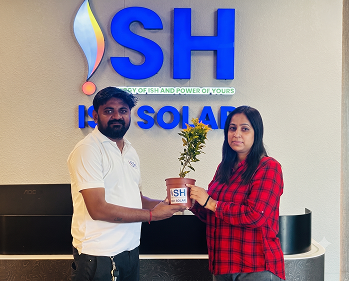
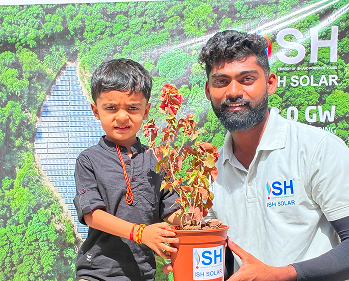
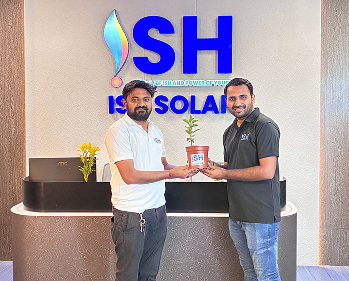
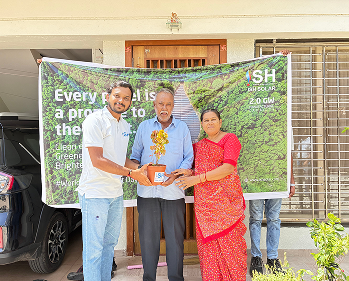
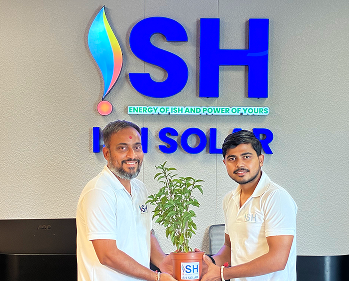
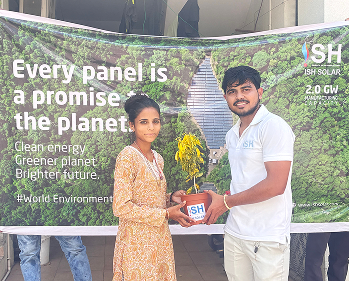
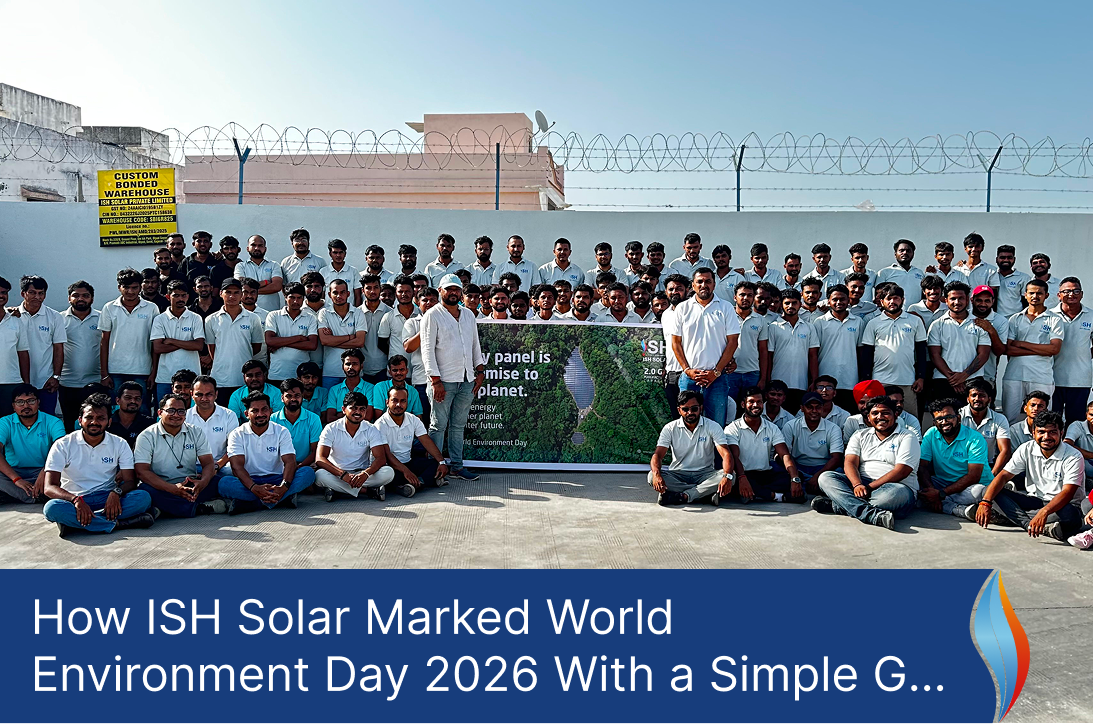
This year, we decided to keep things simple. On June 5th, 2026, ISH Solar celebrated World Environment Day by distributing small potted plants and rope-hanging plants to our employees, visitors, partners, and stakeholders. No elaborate arrangements – just a straightforward activity that carried a clear message. Taking care of the environment does not always require big moves. Sometimes it starts with something as small as a plant on your desk.
It is easy to feel like individual actions do not add up to much when the environmental problems we face are so large. But that thinking tends to hold people back from doing anything at all.
Most lasting habits start small. Watering a plant each morning, choosing to reuse rather than discard, being a little more mindful about energy use – none of these feel significant on their own. Together, however, they reflect a way of thinking that makes a genuine difference over time.
We wanted this year’s World Environment Day activity to reflect that. Not as a grand gesture, but as a practical reminder that sustainability is something you build into daily life – not something reserved for one day on the calendar.
The activity was straightforward and participatory. The team came together at our facility, and potted plants and rope-hanging plants were distributed among employees, as well as the visitors, partners, and stakeholders who were part of the day.
A tree-planting activity was also carried out on the premises, with team members planting saplings together. Inside the office, leadership personally handed plants to employees – a small but deliberate gesture that made the occasion feel more personal. Employees also carried their plants during a walkthrough near the facility, making the activity more collective and visible.
The atmosphere was relaxed and positive throughout. People talked, took photographs, and left with something they could actually grow and care for.
Gifting a plant might seem like a small thing, and in some ways it is. But there is practical reasoning behind the choice.
A plant requires attention. It needs water, adequate light, and a little care every few days. When someone receives a plant and actually looks after it, they are making a genuine commitment to something living. Over time, that kind of routine care can quietly influence how a person relates to their environment more broadly. It is a small shift, but a real one.
There is also a straightforward benefit to greenery. Plants improve air quality, bring some life into indoor spaces, and make workplaces and homes noticeably more pleasant. We wanted employees and stakeholders to take something home that was useful day-to-day – not just a symbolic token.
Rope-hanging plants were included because they suit people with limited balcony or window space – low-maintenance and easy to place without taking up much room.
As a solar energy company, our work is connected to reducing carbon emissions and supporting cleaner energy. But sustainability is not only about the products a company makes or installs.
It is also about the culture built internally – whether the values a company talks about are reflected in how its people think and behave. Initiatives like this are part of building that culture. They signal, within our own community, that environmental responsibility is an everyday practice and not just a corporate objective.
World Environment Day is a useful marker, but the point is always to take something beyond the day itself.
We hope the plants distributed this year find good spots in homes, on office desks, and on balconies across the city. And we hope the conversations started on June 5th carry forward in small ways through the months ahead.
The broader shift toward sustainability happens when more people treat greener choices as a normal part of daily life. This is one small way of contributing to that.
The United Nations established it in 1972 and it has been observed on June 5th ever since. Today it is marked across more than 143 countries as a global platform for environmental awareness and action.
Plants absorb carbon dioxide and release oxygen. Beyond the direct benefit, regularly tending to a plant builds a broader awareness of the natural environment – which over time tends to influence other choices and habits.
Money plants, snake plants, peace lilies, and pothos are all practical low-maintenance choices. They need minimal watering and do well in typical indoor light conditions across most parts of India.
Workplace culture influences how people behave both at work and at home. When sustainable habits are normalised within an organisation, they tend to extend into everyday personal life as well.
Solar panels generate electricity without greenhouse gas emissions during operation. Shifting to solar reduces dependence on fossil fuels and is one of the more direct ways to reduce carbon emissions at scale.

For years, Indian solar manufacturing lived in the shadow of larger, cheaper overseas suppliers. That perception is changing fast.

Make some noise, you are in Ish Solar’s world. As people are turning to solar today, it is very important for them to be careful about which solar to choose. Most people are getting caught up in the cycle of cheapness and making their investment a failure. At first, they think that cheap solar will work, but let’s see. This type of solar panel initially lasts only three or four years, and over time, its efficiency becomes questionable.

In Gujarat families, we plan for the long haul—whether it’s growing a business across generations or securing a home that lasts. Solar fits perfectly into that vision. Ish Solar’s N-Type modules aren’t just about today’s bills; they’re a 30-year commitment to reliable power that your grandchildren will thank you for.

| Developed by Littlebig.in
Developed by Littlebig.in