Inside ISH Solar: How We Build High-Performance Solar Modules from the Ground Up

A solar module looks simple from the outside, a flat panel of cells behind glass. What most people never see is everything that happens before that panel reaches a rooftop or a solar farm. At ISH Solar, we want to pull back the curtain and walk you through how our modules are actually built, from raw material to final dispatch, and why every step is designed around one goal: consistent, high-performance solar that holds up for decades.

It Starts With the Right Raw Materials

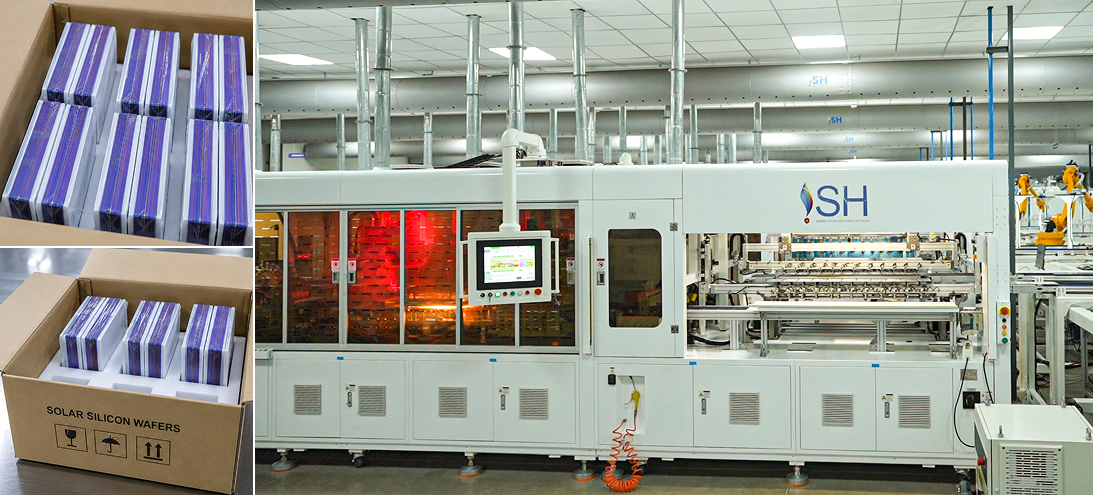
Before a single cell is manufactured, ISH Solar is selective about what goes into it. As a Solar Cell Manufacturer in India, we know that the quality of the final module is only as good as the materials that go into it, so ISH Solar works with careful sourcing standards from the very first stage of production. This is also where ISH Solar’s commitment to Made in India Solar Modules begins, building locally without cutting corners on input quality.

It Starts With the Right Raw Materials

Cell Manufacturing, Where Precision Really Matters

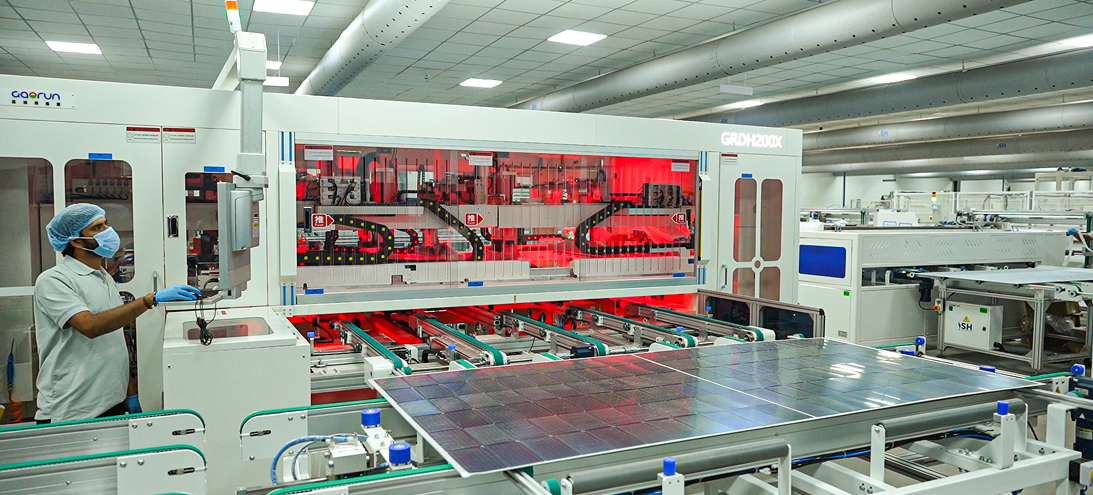
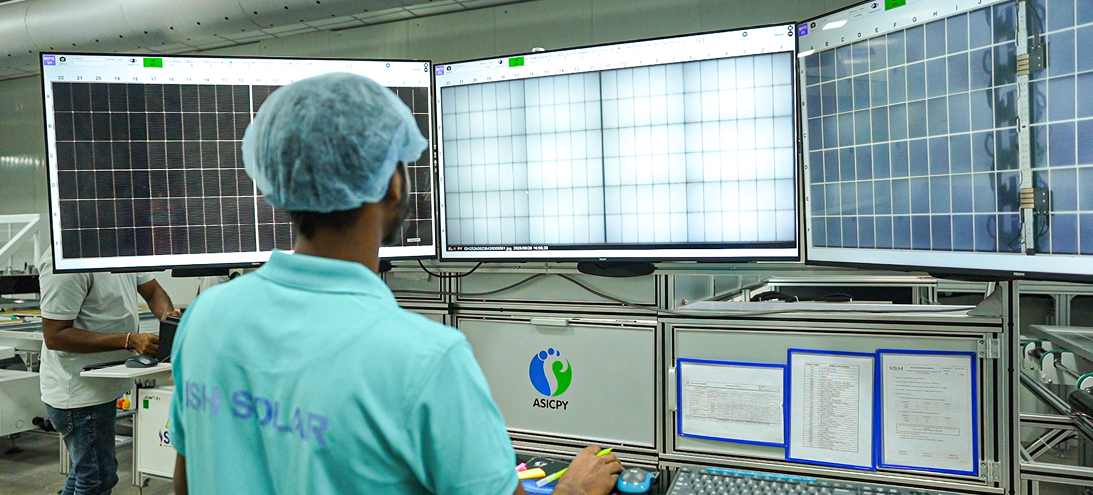
This is the stage where ISH Solar manufactures its N-Type TOPCon Solar Modules, and it is also where AI-driven precision plays the biggest role in the ISH Solar process. Our production lines use AI-powered imaging and monitoring to catch micro-cracks, soldering inconsistencies, and cell-level defects long before they could ever make it into a finished module. With a 2 GW Solar Cell Manufacturing Capacity, this kind of real-time monitoring is not optional for ISH Solar, it is what keeps quality consistent across every batch we produce.

Cell Manufacturing, Where Precision Really Matters

Module Assembly and Lamination

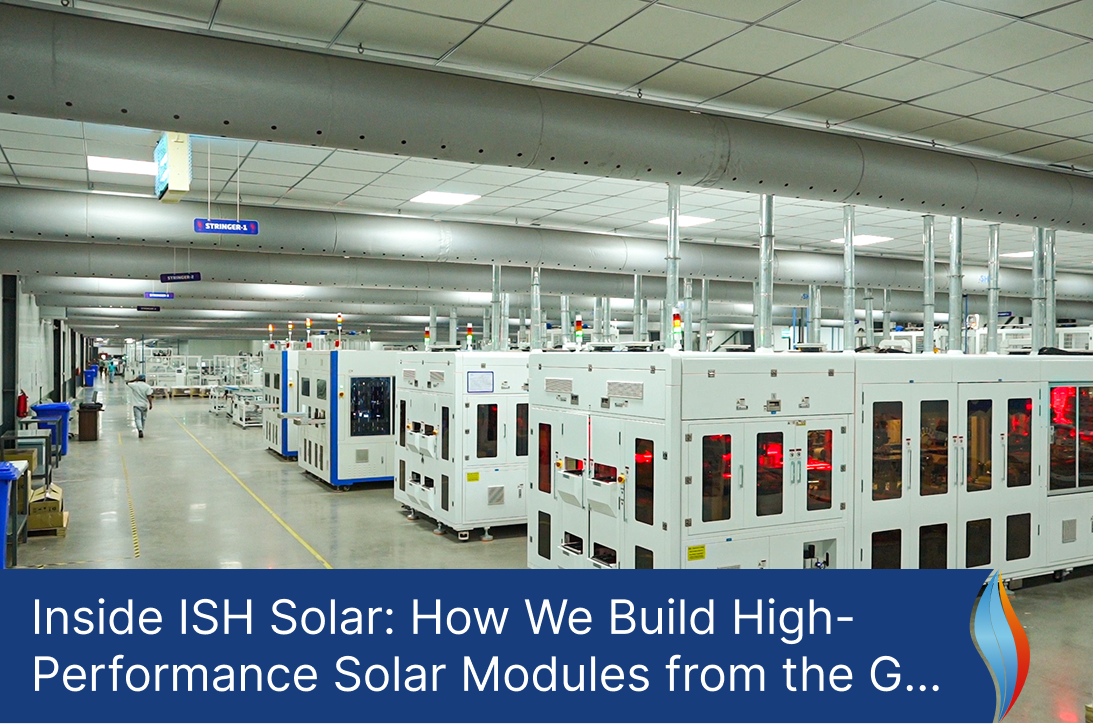
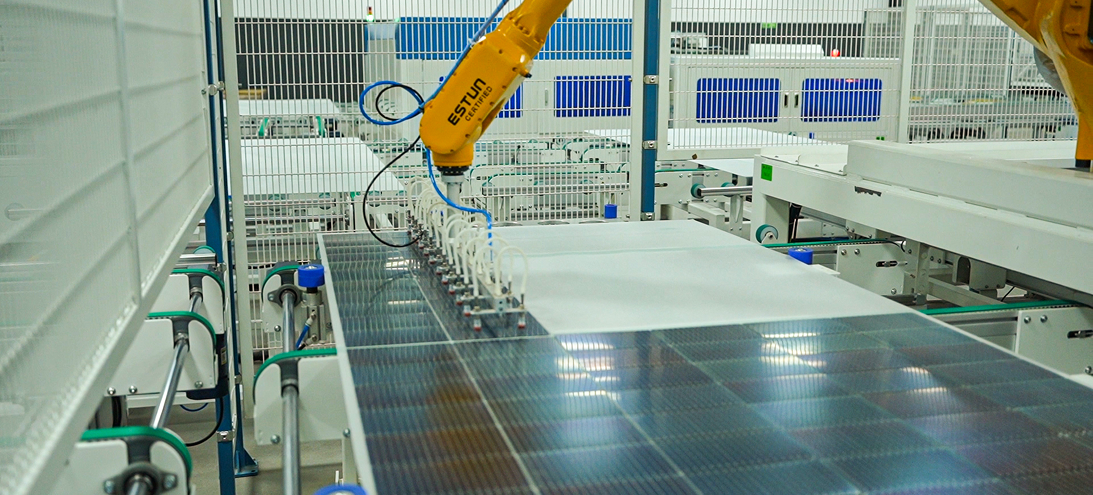
Once cells pass quality checks, they move into module assembly, where individual cells are connected and laminated into the finished panel structure. This stage determines a lot about a module’s long-term durability, since poor lamination is one of the most common causes of premature degradation in lower-quality panels. ISH Solar’s 3 GW Solar Panel Manufacturing Capacity runs on standardized, closely monitored assembly processes designed specifically to avoid that outcome.

Module Assembly and Lamination

Testing Every Module Before It Leaves

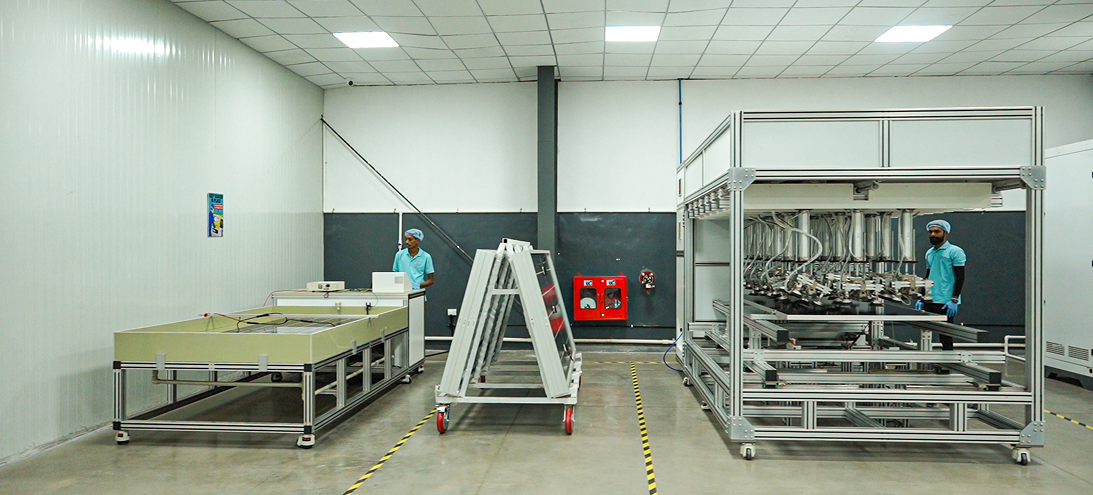
ISH Solar does not treat testing as a final formality, but as one of the most important stages in the process. Every module goes through performance testing designed to verify it meets ISH Solar’s efficiency and durability standards before it is approved for shipment. This is how ISH Solar backs its modules with a long-term Linear Power Output Warranty, low first-year degradation, and low annual degradation, because performance has already been verified before it ever leaves the facility.

Built for Every Application, Not Just One

ISH Solar manufactures with residential, commercial, industrial, and utility-scale applications in mind, which means the process has to hold up across very different use cases. Whether a module is headed to a rooftop residential installation, a commercial or industrial facility, or a large ground-mounted utility-scale project, it comes from the same AI-monitored, quality-controlled ISH Solar production line. As a Solar PV Module Manufacturer and Solar PV Cell Manufacturer, that consistency across applications is something ISH Solar takes a lot of pride in.

Built for Every Application, Not Just One

Why We Build This Way

ISH Solar could take shortcuts. Plenty of manufacturers do. But ISH Solar was built around Advanced Solar Manufacturing because we believe the solar industry does not need more panels, it needs more panels that actually perform the way they are supposed to, for as long as they are supposed to. Every stage of the ISH Solar process, from raw material sourcing to final testing, exists to support that goal. It is what makes ISH Solar a Solar Module Manufacturer in India that customers and partners can genuinely rely on, not just today, but decades into a module’s working life.

Frequently Asked Questions (FAQs)

What makes ISH Solar's manufacturing process different from other Indian manufacturers?

ISH Solar’s use of AI-driven precision at the cell manufacturing stage, combined with strict testing before dispatch, is central to how ISH Solar maintains consistency at scale.

Does ISH Solar test every single module, or just samples?

Every ISH Solar module goes through performance testing before it is approved for shipment, not just batch samples.

What cell technology does ISH Solar use in its modules?

ISH Solar manufactures N-Type TOPCon Solar Modules, a high-efficiency cell architecture built for lower degradation and stronger long-term output.

How does ISH Solar's manufacturing capacity affect quality control?

Operating at 3 GW panel and 2 GW cell manufacturing capacity means real-time monitoring is essential for ISH Solar, since even small inconsistencies can multiply quickly at scale.

Can ISH Solar modules be used for both residential and utility-scale projects?

Yes. The ISH Solar production process is designed to serve residential, commercial, industrial, and utility-scale applications from the same quality-controlled line.

What warranty backs ISH Solar modules?

ISH Solar modules are backed by a long-term Linear Power Output Warranty, along with low first-year and low annual degradation performance.

RELATED POSTS

More Panels, Lower Price - But Is It Actually a Better Deal-featured

More Panels, Lower Price – But Is It Actually a Better Deal?

You have three solar quotations in front of you. One offers 10 kW for a price that seems almost too good. Another proposes 8 kW from a brand you recognise, with a longer warranty and a proper site survey included. The third is somewhere in the middle – more panels, vague warranty terms, and a salesperson emphasising system size over actual generation.

Solar Panels Alone Don't Create Sustainability - Smart Planning Does-featured

Solar Panels Alone Don’t Create Sustainability – Smart Planning Does

A warehouse owner in Pune installed a 150 kW rooftop solar system two years ago. Savings looked great on paper. Installation happened fast. Nobody spent much time on the roof beforehand. Within eighteen months, panels had hot spots, the roof was leaking around brackets, and output was 22% below projections.