Inside an AI-Powered Solar Factory: How Precision Shapes Solar Module Quality

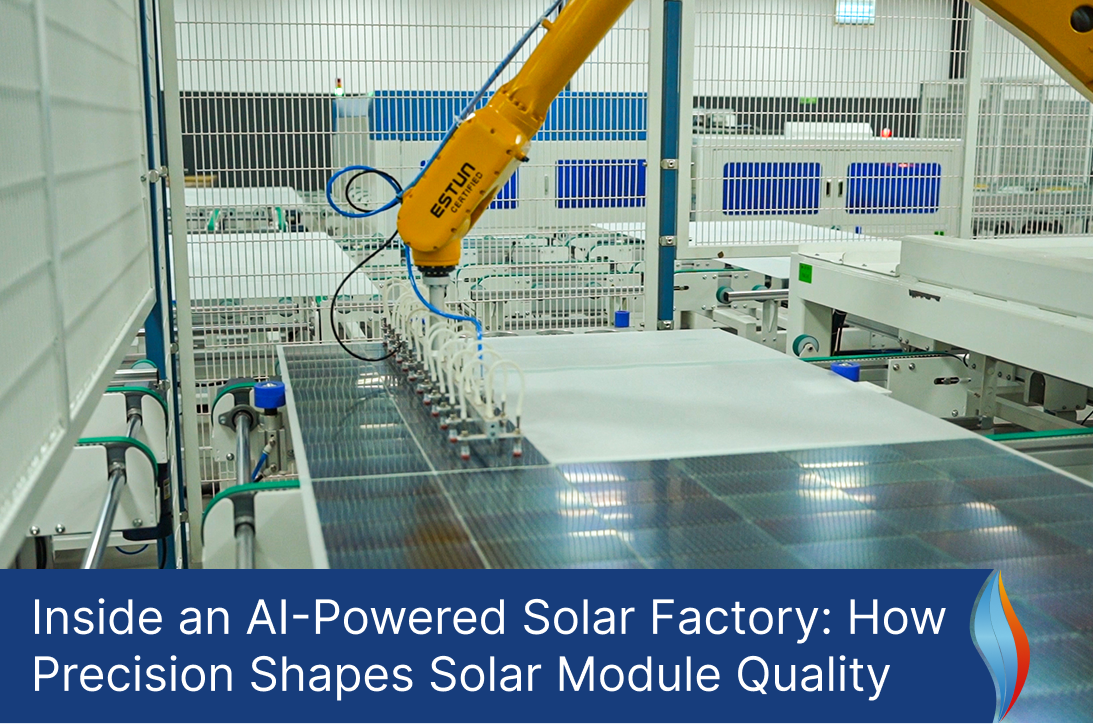
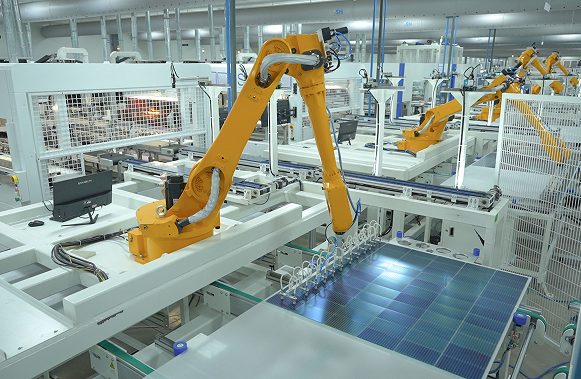
A finished solar module looks like the simplest product in the world: glass, a frame and a grid of dark cells. What decides whether it still performs well years from now happens long before it reaches a roof, on a production line where a fraction of a millimetre or a few degrees of heat can change the outcome. This is a walk through that line, and through the part AI plays in keeping it steady.

Why a Perfect-Looking Panel Can Still Be Flawed

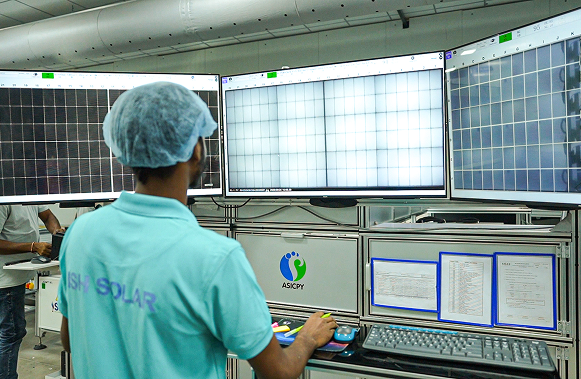
Some of the most damaging defects in a module cannot be seen at all. Microcracks in a cell are invisible to the naked eye. They show up only under electroluminescence (EL) imaging, where a powered module glows in infrared and cracks appear as dark lines. A cell that leaves the factory with one can lose output sooner under heat, wind and thermal cycling than a clean cell. That is the real job of precision manufacturing: catching what the eye misses, and preventing it from forming in the first place.

From Wafer to Module: Where Precision Gets Decided

Every module passes through the same broad stages, and each stage has its own tolerance for error.

Cell making

A wafer becomes a cell through a series of very thin coatings and treatments. N-Type TOPCon cells depend on those thin layers, so a small drift in process settings shows up later as lost efficiency.

Stringing and layup

Cells are soldered into strings and arranged into the module. Alignment and soldering heat both matter, because stressed cells crack more easily.

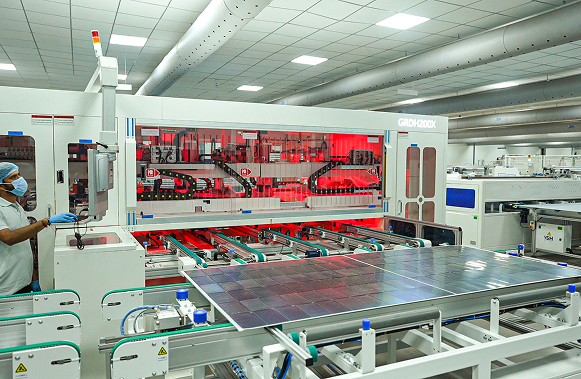
Lamination

Glass, encapsulant, cells and backsheet are bonded under controlled heat and pressure. Temperature and timing decide how well the module seals out moisture for years.

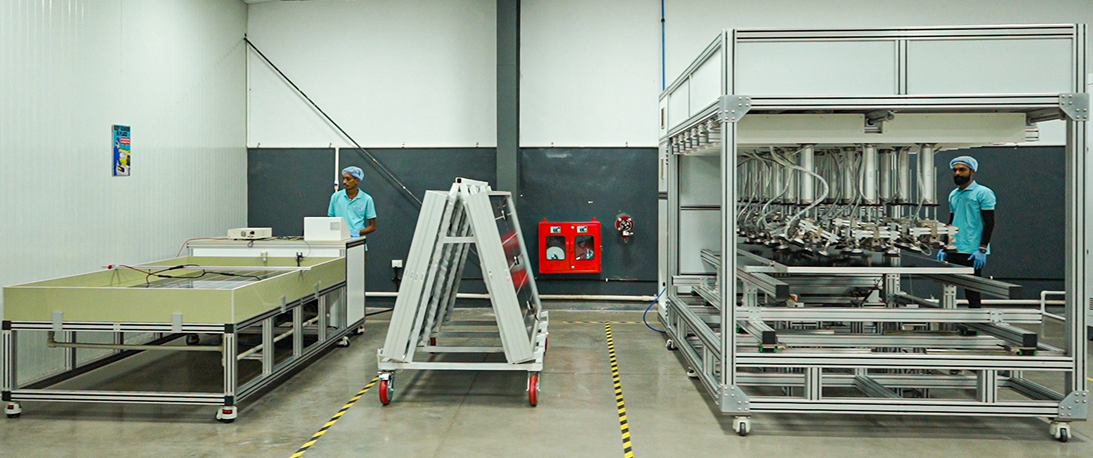
Testing and inspection

Finished modules are flash tested for power output and checked with EL imaging for hidden defects.

How AI Helps on a Solar Line

A person reviewing EL images all day will tire, and judgement shifts from one shift to the next. AI-based machine vision does not. Trained on defect images, it flags cracks, broken finger lines and other faults quickly, and it applies the same standard to the first module of the morning and the last of the night. The same approach can watch process data such as temperature and timing, and flag drift before it turns into scrap. AI does not replace skilled engineers. It gives them cleaner information and more consistent checks.

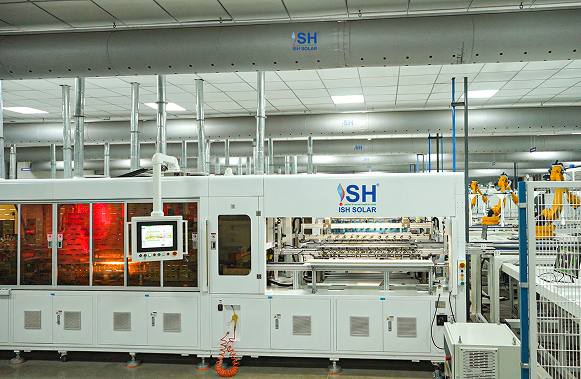
Precision on ISH Solar's Production Line

ISH Solar is an Indian solar cell and module manufacturer, and AI-driven manufacturing is central to how it builds. The goal is consistent product quality, with the thousandth module matching the first. That consistency starts with advanced production technology and high manufacturing standards, and it carries into N-Type TOPCon modules designed for long-term performance, with low degradation and a linear power output warranty. Because ISH Solar makes both cells and modules in India, it has direct influence over two of the stages where precision counts most.

What Precision Means for the Panel You Buy

Factory discipline never appears as one line on a spec sheet, but it shows up over time. Consistent cells and clean lamination support steady output and low degradation, which is what a long warranty depends on. Performance also depends on installation quality and site conditions, so a good module is the start of a good system and not all of it. When you compare suppliers, ask how modules are inspected before dispatch and what the warranty and degradation terms say. Ask ISH Solar the same questions.

Conclusion

Precision is rarely visible in a finished panel, which is exactly why it deserves attention. AI helps catch what the eye cannot, and engineers keep the process steady. For ISH Solar, that combination is how silicon becomes a module people can rely on for years.

Frequently Asked Questions (FAQs)

How does AI improve solar module quality?

Machine vision reviews inspection images such as EL scans to flag microcracks and other defects consistently, and process data can reveal drift early.

Does ISH Solar use AI in its manufacturing?

Yes. ISH Solar’s manufacturing is AI-driven, with a focus on consistent product quality and high manufacturing standards.

What type of modules does ISH Solar manufacture?

N-Type TOPCon modules, including high-efficiency, residential, commercial and utility-scale ranges.

Does ISH Solar make its own solar cells?

Yes. ISH Solar manufactures both solar cells and solar modules in India.

What is EL testing in solar manufacturing?

It is an imaging method that powers a module so hidden defects such as microcracks show up as dark lines.

Where can ISH Solar modules be used?

In rooftop systems for homes, commercial buildings, industrial facilities and ground-mounted solar farms.

RELATED POSTS

How Ish Solar Harvests Energy from the Colors You Can’t See-featured

How Ish Solar Harvests Energy from the Colors You Can’t See

In the entire universe, the Sun is the only planet that will continue to shed important rays on the Earth and other planets. Speaking specifically about Earth, the Sun is an important planet that provides energy to all living things on Earth. The sun’s rays are usually yellow and white in color, but along with the sun, ultraviolet rays also fall on the earth, which are usually not visible to the naked eye.