A warehouse owner in Pune installed a 150 kW rooftop solar system two years ago. Savings looked great on paper. Installation happened fast. Nobody spent much time on the roof beforehand. Within eighteen months, panels had hot spots, the roof was leaking around brackets, and output was 22% below projections.
He didn’t have a solar problem. He had a planning problem.
This happens across India more often than the industry admits. Going solar and going solar sustainably are two very different things.
Installing Solar and Doing It Right Are Not the Same
Real sustainability isn’t putting panels on a roof. It’s building a system that performs accurately, lasts long, wastes nothing, and delivers predictable returns year after year.
That doesn’t begin with the panels. It begins with what happens before a single bracket is drilled.
A proper site survey determines whether a system will genuinely perform - or quietly underdeliver for decades. In India, this matters enormously. Dense urban rooftops, aging industrial sheds, and terraces crowded with water tanks demand careful evaluation, not guesswork.
Rooftop condition
Cracks and worn waterproofing create leak points around mounting brackets that worsen every monsoon.
Structural strength
Panels and hardware add real load. Older buildings and factory sheds need structural checks before sizing any system.
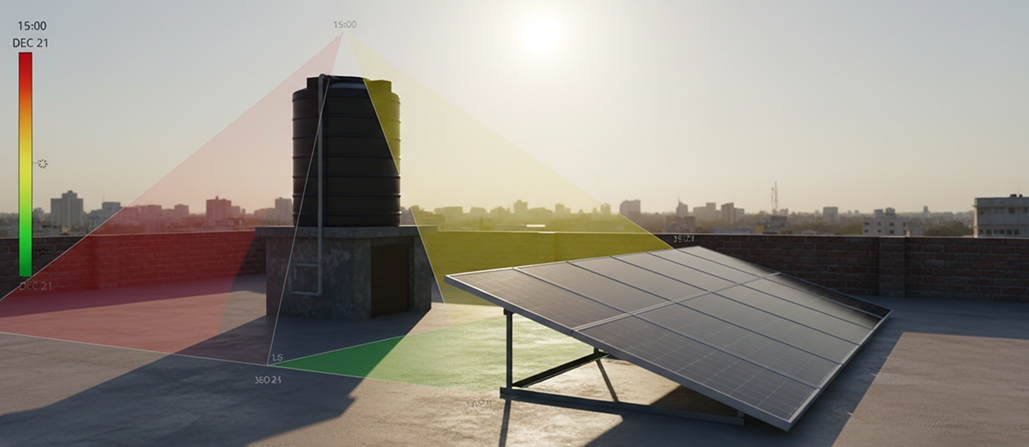
Shadow analysis
A water tank, parapet, or neighbouring building cuts output for hours daily. Shadow mapping across seasons is foundational.
Direction and tilt
South-facing panels at correct tilt generate significantly more energy. A small error here means daily losses for 25 years.
Electrical compatibility
Wiring, distribution board, and earthing must be compatible. Mismatches create preventable safety risks and efficiency losses.
Space optimisation
Shadow-free area should be configured for maximum output - not just packed with panels.
What Poor Planning Costs You
No structural check means roof leaks. No shadow analysis means accelerated cell degradation. Wrong tilt means faster dust buildup and more frequent cleaning.
Each problem compounds. Maintenance costs rise. Components degrade faster. The ROI that looked attractive keeps stretching further away – sometimes never fully arriving. That’s the opposite of sustainability, even if panels are technically generating clean energy.
Real Sustainability Is a Design Outcome
When a system is planned correctly, benefits become real. Better energy utilisation reduces grid dependence. Slower degradation means fewer repairs and less waste. Predictable generation enables smarter energy management.
For homeowners, bills drop to the levels promised. For factories, solar genuinely offsets peak-hour consumption. The system earns its place – financially and environmentally.
Indian Conditions Demand More Rigour
Dust in dry months, summer heat stressing components, monsoon moisture testing every sealed junction, dense urban rooftops with unpredictable shading – Indian conditions make thorough assessment more critical here than almost anywhere else.
A system that works adequately in mild climates can fail significantly on an Ahmedabad rooftop in May if it wasn’t designed for that reality.
Frequently Asked Questions
Does a site survey really affect performance?
Yes. Systems built on accurate site data consistently outperform those built on assumptions in generation, reliability, and lifespan.
How does poor planning affect sustainability?
Poorly planned systems degrade faster, need more repairs, and generate less – increasing grid dependence and long-term costs.
Why is shadow analysis critical in India?
Indian rooftops are crowded. Unaccounted shadows reduce output significantly and unevenly – making shadow mapping essential before any design is finalised.
Is a survey necessary for small home systems?
Yes. Roof condition, shading, and electrical compatibility affect every system size. A 3 kW home installation is just as impacted proportionally as a large commercial one.
How does correct tilt help?
Right tilt maximises energy capture and helps rain naturally clean panels. Wrong tilt means lower generation and faster dust accumulation together.
What should I ask before agreeing to installation?
Ask if they conduct a physical site visit, how generation estimates are calculated, and what certifications the panels carry. Vague answers are a warning sign.
How does good design reduce maintenance?
Correct mounting prevents leaks. Proper shadow analysis prevents hot spots. Right-sized inverters run efficiently. Each reduces maintenance cost over the system’s life.
What makes Indian conditions particularly demanding?
Dust, intense heat, monsoon moisture, and dense urban rooftops make thorough pre-installation planning more important here than almost anywhere else globally.