One of the first questions every homeowner asks before going solar is simple: how many panels will actually fit my needs? The answer depends on your monthly electricity consumption, your roof space, and the wattage of the panels you choose. Here is a practical breakdown of what a 1kW, 3kW, 5kW, and 10kW solar system looks like on an Indian rooftop using ISH Solar’s high-efficiency modules.
How System Size Is Calculated
Solar system size is measured in kilowatts (kW), which refers to the total capacity of all the panels combined, not the number of panels itself. The number of panels you need depends on the wattage of each individual panel. ISH Solar manufactures high-efficiency N-Type TOPCon modules in the higher wattage range, which means a system built with ISH Solar panels generally needs fewer panels than the same size system built with older, lower wattage modules. Choosing a high wattage solar module upfront reduces both the panel count and the roof space required for the same output.
1kW Solar System
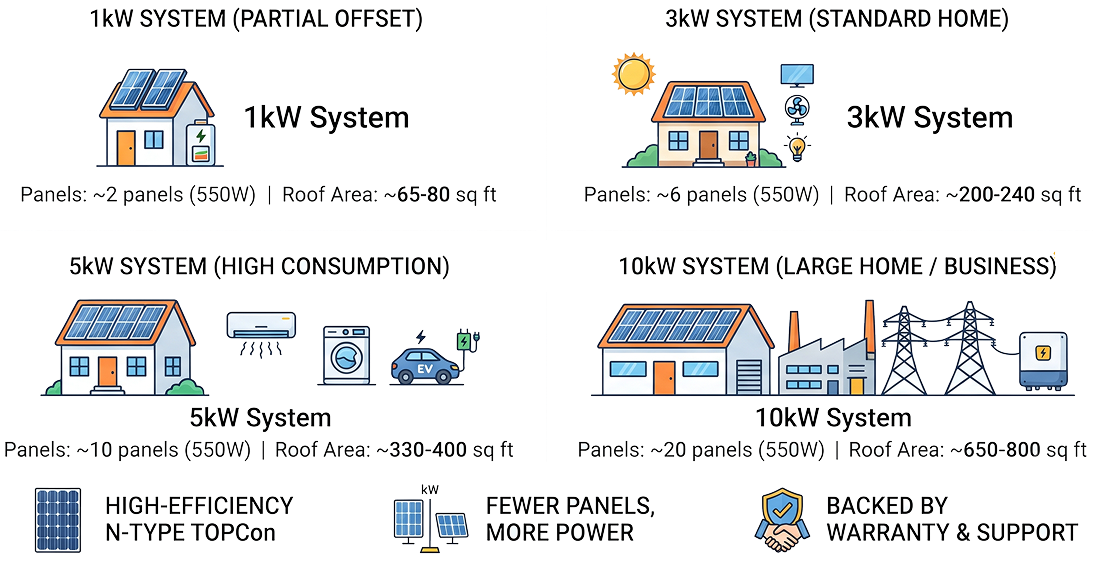
A 1kW system is usually the starting point for very small households or homes looking to offset a portion of their electricity bill rather than go fully solar. Using ISH Solar's high-efficiency panels in the 500W-550W class, a 1kW system needs around 2 panels, requiring roughly 65 to 80 square feet of shadow-free roof space. This size is more common as an entry-level or partial offset system rather than a full home solution.
3kW Solar System
A 3kW system is one of the most popular sizes for Indian homes, especially under subsidy schemes like PM Surya Ghar. With ISH Solar's high wattage modules, a 3kW system typically requires around 6 panels and about 200 to 240 square feet of roof area. This size usually covers the electricity needs of a small to mid-sized household running basic appliances, lighting, fans, and a couple of ACs, while ISH Solar's low degradation rating helps keep that output consistent year after year.
5kW Solar System
A 5kW system suits larger households with higher daily consumption, multiple air conditioners, or homes that also want to charge an EV or run heavier appliances. With ISH Solar's high-efficiency modules, this works out to around 10 panels, needing approximately 330 to 400 square feet of rooftop space. This is often the sweet spot for families who want real independence from grid electricity, and ISH Solar's N-Type TOPCon technology helps maximize generation even with limited roof area.
10kW Solar System
A 10kW system is generally suited for large homes, farmhouses, or properties with heavy power consumption, sometimes even small home-based businesses. Using ISH Solar's high wattage panels, this size needs around 20 panels, spread across roughly 650 to 800 square feet of roof space. At this scale, ISH Solar's manufacturing consistency across its 3 GW panel and 2 GW cell capacity matters even more, since a large system depends on every panel performing at the same rated output.
Why Panel Wattage Changes the Count
Not every manufacturer offers panels at the same wattage, and this is exactly where ISH Solar's high-efficiency PV modules make a difference. Lower wattage panels mean more panels and more roof area for the same system size, while ISH Solar's higher wattage modules reduce both. This is why checking the actual module specification matters more than just asking for a "5kW system" from your installer, since two quotes for the same size system could involve very different panel counts depending on whether ISH Solar modules or standard lower wattage panels are used.
Other Factors That Affect Panel Count
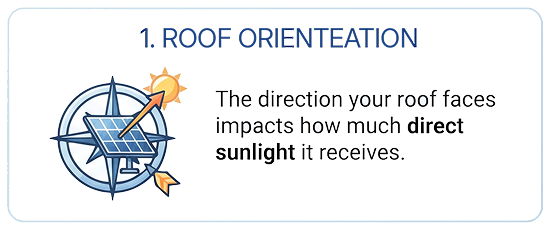
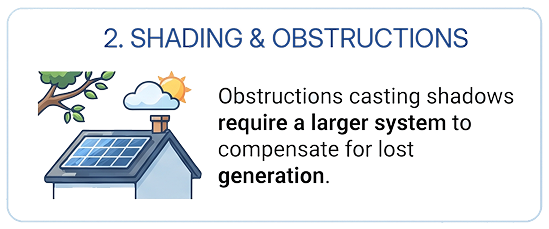
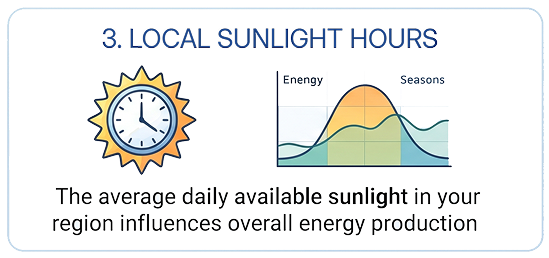
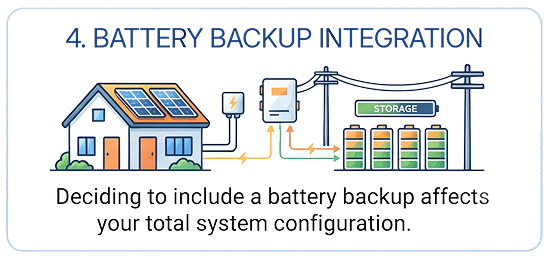
Beyond system size, your final panel count can shift based on roof orientation, shading from nearby structures, local sunlight hours, and whether you are including a battery backup. A rooftop with partial shading may need a slightly larger ISH Solar system to compensate for lost generation, while a well-oriented, shadow-free roof can often work with a smaller ISH Solar setup than initially estimated. It is always worth getting a proper site assessment rather than relying only on standard calculations.
Backed by Warranty and Support
Whichever system size you land on, the number of panels is only half the picture. ISH Solar backs every module with a long-term linear power output warranty and a separate product warranty, along with low first-year and annual degradation, so your 1kW, 3kW, 5kW, or 10kW system keeps performing close to its rated capacity for decades. ISH Solar also supports homeowners with technical guidance and project consultation, helping you confirm the right panel count and layout before installation rather than after.
Frequently Asked Questions (FAQs)
How many ISH Solar panels do I need for a 3kW system?
With ISH Solar’s high-efficiency modules, a 3kW system typically needs around 6 panels, though this can vary based on the exact wattage used.
Does choosing ISH Solar panels mean fewer panels for the same system size?
Yes, ISH Solar’s high wattage N-Type TOPCon modules reduce the total panel count and roof space needed for a given system size compared to lower wattage panels.
How much roof space does a 5kW ISH Solar system need?
A 5kW system using ISH Solar’s high-efficiency modules generally needs around 330 to 400 square feet of shadow-free roof area.
Are ISH Solar panels suitable for larger systems like 10kW?
Yes, ISH Solar modules are available across residential, commercial, and utility-scale applications, making them suitable for larger home systems as well.
Does ISH Solar offer a warranty across all these system sizes?
Yes, every ISH Solar module comes with a long-term linear power output warranty and a separate product warranty, regardless of system size.
Conclusion
Figuring out the right system size comes down to your electricity consumption, available roof space, and the wattage of the panels you choose. Whether it is a small 1kW setup or a full 10kW installation, ISH Solar's high-efficiency N-Type TOPCon modules help you get more output from fewer panels and less roof space, backed by low degradation and long-term warranty support. Before finalizing a system size, it is worth getting a proper site assessment and confirming the exact ISH Solar module specifications your installer plans to use, so the numbers on paper match what actually ends up on your roof.