1. N-Type TOPCon cells
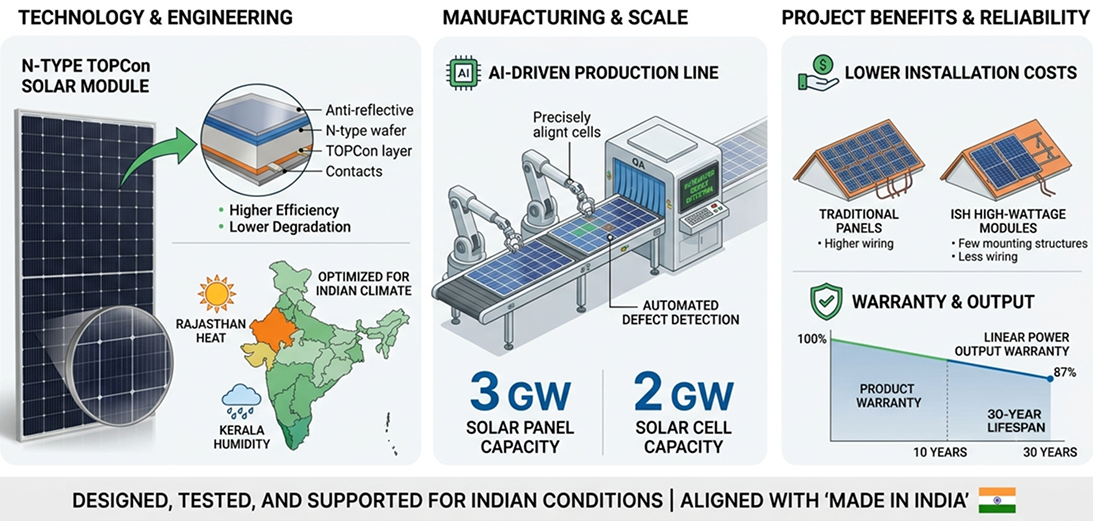
TOPCon (Tunnel Oxide Passivated Contact) cells reduce energy loss at the cell surface, pushing efficiency higher while keeping degradation low over the module's lifetime. This is currently one of the most widely manufactured high-efficiency technologies in India.
2. Bifacial modules
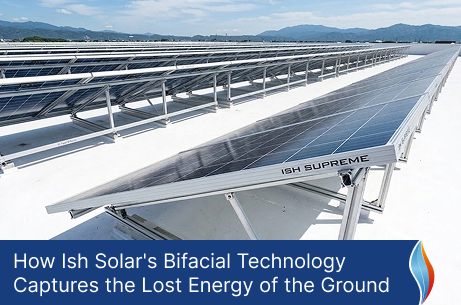
These panels generate power from both the front and back side, picking up reflected light from the ground or nearby surfaces. They work especially well on rooftops with light-colored surfaces or ground-mounted farms.
3. Heterojunction (HJT) cells
HJT combines crystalline and amorphous silicon layers, giving panels a favorable temperature coefficient. This means they lose less output in extreme heat, which matters a lot for Indian summers.
4. Perovskite cells
An emerging cell material that absorbs a wider range of sunlight and can be manufactured at lower cost. Lab efficiencies have crossed 27%, though long-term durability is still being tested at commercial scale.
5. Tandem solar cells
These stack two cell materials, often perovskite over silicon, to capture more of the light spectrum in a single panel. Efficiency in lab conditions has pushed past 30%, well above single-material cells.
6. AI-driven manufacturing
Factories are increasingly using AI for cell alignment, soldering precision, and defect detection during production. This reduces manual inspection error and keeps output more consistent across large batches.
7. High-wattage modules
By packing more cells and improving cell efficiency, manufacturers now produce panels with significantly higher wattage. Fewer panels are needed for the same capacity, cutting installation and mounting costs.
8. Floating solar farms
Panels installed on reservoirs and lakes benefit from natural cooling, which improves efficiency, while also reducing water evaporation and saving land that would otherwise be needed for ground-mounted arrays.
9. Battery Energy Storage Systems (BESS)
Pairing solar with battery storage allows excess daytime power to be used at night or during outages, making solar a more reliable, round-the-clock energy source rather than a daylight-only one.
10. Solar tracking systems
Motorized trackers adjust panel angles through the day to follow the sun, improving energy capture compared to fixed installations, though they add mechanical complexity and maintenance needs.
11. Transparent and building-integrated solar
Semi-transparent solar materials are being tested in windows and facades, turning building surfaces into power sources without blocking light, mostly in early-stage commercial and institutional projects.
12. Indoor and low-light photovoltaics
Designed for artificial light rather than sunlight, these panels power small IoT devices and sensors indoors, removing the need for constant battery replacement in low-power electronics.
Most of these are still years from mainstream rooftops in India. The technologies actually being manufactured and deployed at scale right now are N-Type TOPCon cells, high-wattage design, and AI-driven manufacturing, and this is exactly where ISH Solar has built its product line.