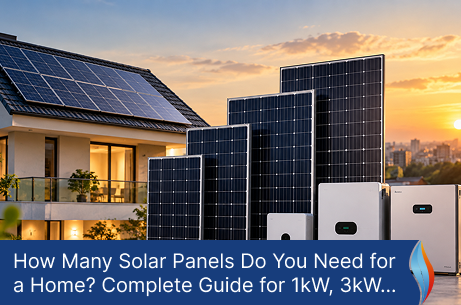
How Many Solar Panels Do You Need for a Home? Complete Guide for 1kW, 3kW, 5kW & 10kW Systems
One of the first questions every homeowner asks before going solar is simple: how many panels will actually fit my needs?

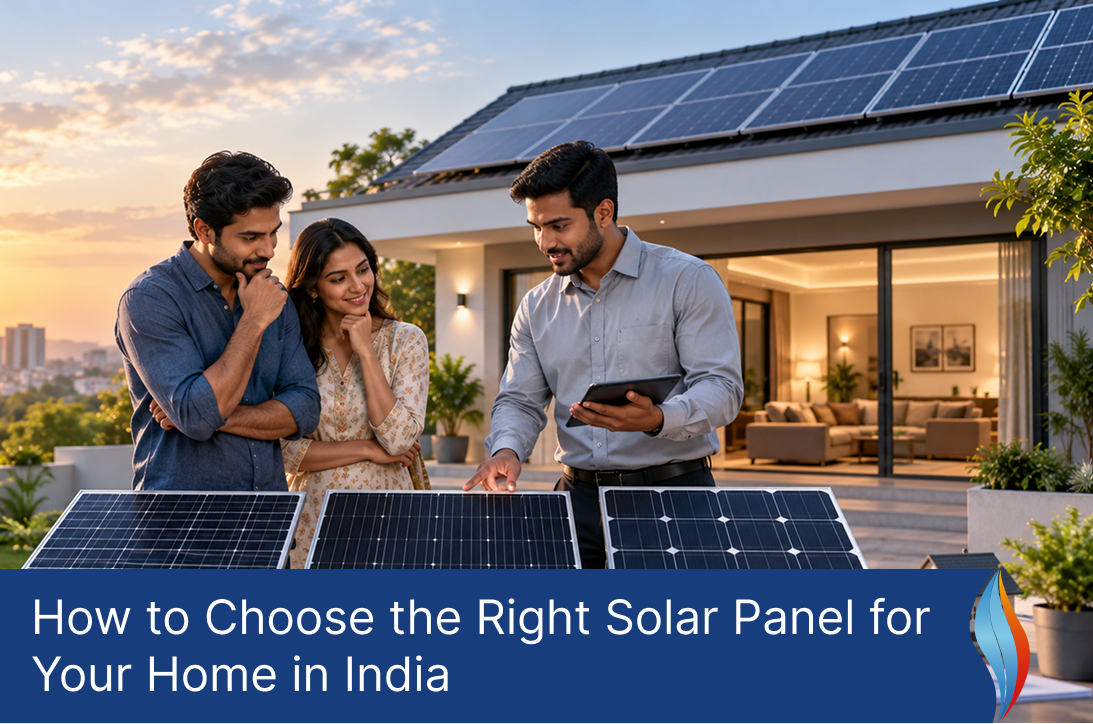

Before looking at price, look at who is actually making the panel. A lot of sellers in India are traders repackaging imported cells under a local brand name rather than running their own production. A solar cell manufacturer or solar module manufacturer with its own manufacturing facility, the way ISH Solar does, can maintain far more consistent quality across every batch, which matters a lot when you are trusting a product to sit on your roof for the next 25 to 30 years. Always check the manufacturing capacity and whether cells and modules are made in-house.
Not all solar panels are built the same way. Older polycrystalline panels are cheaper but less efficient, while newer N-Type TOPCon modules, like the ones ISH Solar manufactures, convert more sunlight into usable electricity and degrade slower over time. For a home rooftop where space is often limited, a high efficiency solar module means you generate more power without needing extra panels or extra roof area. It is worth asking your installer which cell technology is actually inside the panel, not just the wattage on the sticker.

Two panels can look identical on paper but perform very differently on your roof. Efficiency decides how much electricity you actually get from the same amount of sunlight, and this becomes especially important during Indian summers and monsoons, when panels need to keep performing reliably despite heat, dust, and inconsistent sunlight. ISH Solar's high-efficiency PV modules are built with this in mind, and a slightly higher efficiency rating can add up to noticeably lower bills over the years.

A lot of homeowners focus only on the upfront cost and forget to read the warranty details. Look closely at the linear power output warranty, the separate product warranty, and how much the panel is expected to degrade in its first year versus every year after. ISH Solar backs its modules with low first-year and annual degradation figures, and a panel that degrades faster loses generation capacity year after year, quietly cutting into the savings you expected when you first installed it.

Your solar needs at home are different from a factory rooftop or a ground-mounted farm. Residential rooftop modules are usually built to be lighter, easier to install on limited roof space, and optimized for smaller system sizes, unlike utility-scale modules designed for large ground-mounted installations. ISH Solar offers modules across residential, commercial, industrial, and utility-scale applications, so make sure the panel you choose is actually suited to a residential setup rather than a general-purpose commercial or industrial product.

Quality control is where a lot of budget solar brands cut corners. Manufacturers that use AI-driven manufacturing processes alongside advanced production technology, as ISH Solar does across its 3 GW panel and 2 GW cell manufacturing lines, are able to keep quality consistent across large production volumes. This kind of precision manufacturing reduces human error during production, which directly affects how long a panel performs at its rated capacity before any real drop in output.

A panel is only as good as the support behind it. Look for a manufacturer that offers technical guidance, project consultation, and long-term product support instead of disappearing once the installation is done. ISH Solar stays involved with customers through the entire solar journey, and for a home solar system that is supposed to run for decades, this ongoing relationship matters just as much as the panel specifications.
One of the first questions every homeowner asks before going solar is simple: how many panels will actually fit my needs?
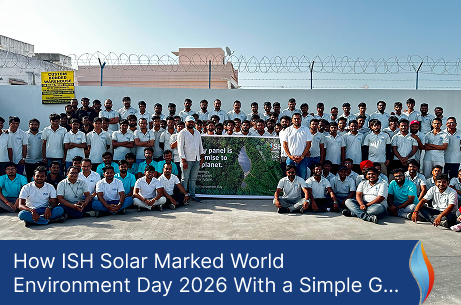
Every year, World Environment Day gives organisations a reason to pause and think about what they are actually doing for the environment – beyond their core business.
This year, we decided to keep things simple. On June 5th, 2026, ISH Solar celebrated World Environment Day by distributing small potted plants and rope-hanging plants to our employees, visitors, partners, and stakeholders. No elaborate arrangements – just a straightforward activity that carried a clear message. Taking care of the environment does not always require big moves. Sometimes it starts with something as small as a plant on your desk.
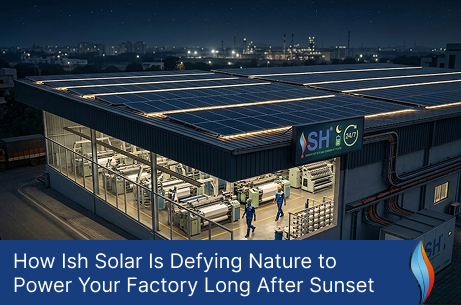
Recently, American astronauts sent back images of Earth from the far side of the Moon. From that distance, you can see how day and night flow gently across our planet, a natural cycle we’ve all learned about in science class.