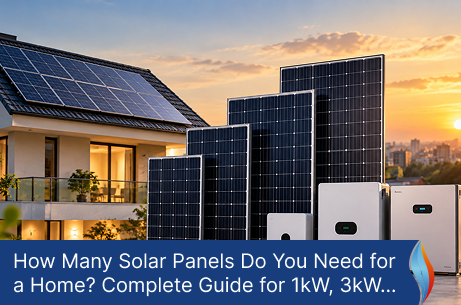
How Many Solar Panels Do You Need for a Home? Complete Guide for 1kW, 3kW, 5kW & 10kW Systems
One of the first questions every homeowner asks before going solar is simple: how many panels will actually fit my needs?
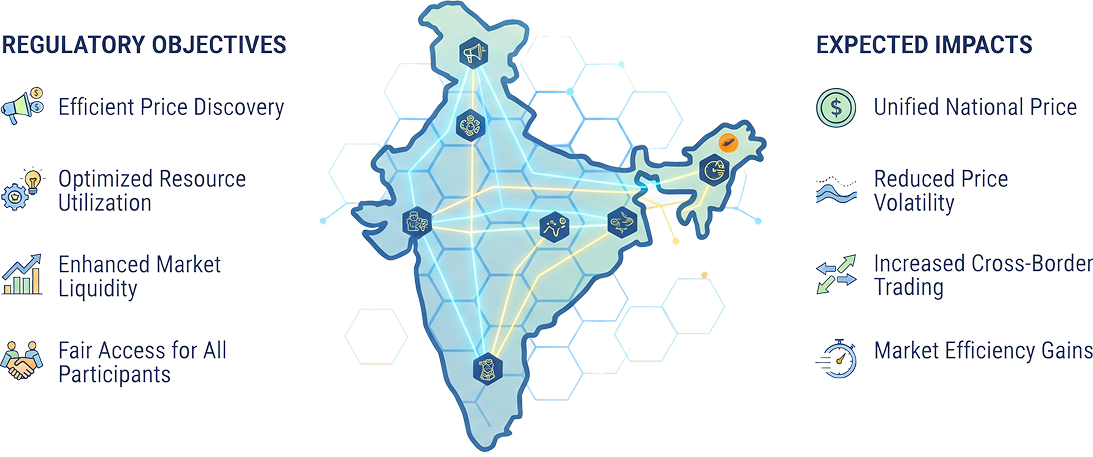
India’s electricity exchanges have long set their own prices. Each one collects bids, clears them separately and publishes its own rate, so the same hour of the same day can carry different prices depending on where a trade is placed. The Central Electricity Regulatory Commission is moving to close that gap through market coupling, and the effect reaches well beyond traders. Solar manufacturers, developers and power buyers all work inside the market this reform reshapes, which makes it relevant to ISH Solar, an Indian solar module and cell manufacturer, and everyone else in the solar value chain.
Developers could measure a plant against a common price benchmark across exchanges, subject to applicable market zones and trading arrangements, which supports financial models.
Pooling bids from every exchange could give sellers a larger set of buyers, which would help open-access consumers buying solar power.
A transparent gap between midday and evening prices can help assess the potential value of battery storage.
Market splitting would reveal where transmission is tight, showing developers where new solar capacity fits best.
It is a proposed system where Grid India matches bids from all power exchanges centrally to set a clearing price, with separate zonal prices when transmission congestion requires.
Not directly. Any effect on tariffs depends on DISCOM procurement costs and regulatory decisions.
Not directly. Rooftop and captive systems mainly serve your own consumption, so exchange prices do not set their output. Their economics depend mainly on your consumption, tariff, system cost and site conditions.
Waiting for this reason alone is rarely necessary. Rooftop solar economics depend mainly on consumption, tariffs, system costs and site conditions, and the rules are still in draft.
ISH Solar supplies residential, commercial and utility-scale projects, and market rules shape how those projects are planned and financed.
ISH Solar modules use N-Type TOPCon technology with low degradation and a long-term linear power output warranty, which supports long-term generation planning.

One of the first questions every homeowner asks before going solar is simple: how many panels will actually fit my needs?


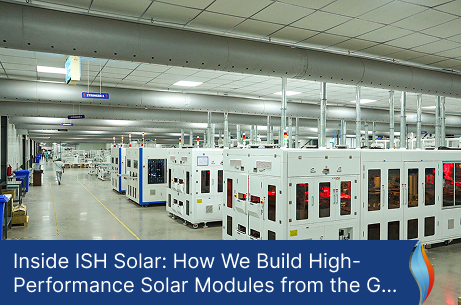
A solar module looks simple from the outside, a flat panel of cells behind glass. What most people never see is everything that happens before that panel reaches a rooftop or a solar farm.
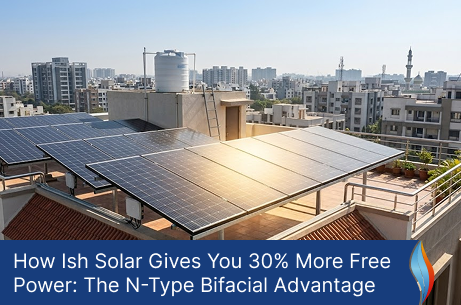
Make some noise, you are in Ish Solar’s world. As people are turning to solar today, it is very important for them to be careful about which solar to choose. Most people are getting caught up in the cycle of cheapness and making their investment a failure. At first, they think that cheap solar will work, but let’s see. This type of solar panel initially lasts only three or four years, and over time, its efficiency becomes questionable.
| Developed by Littlebig.in
Developed by Littlebig.in